
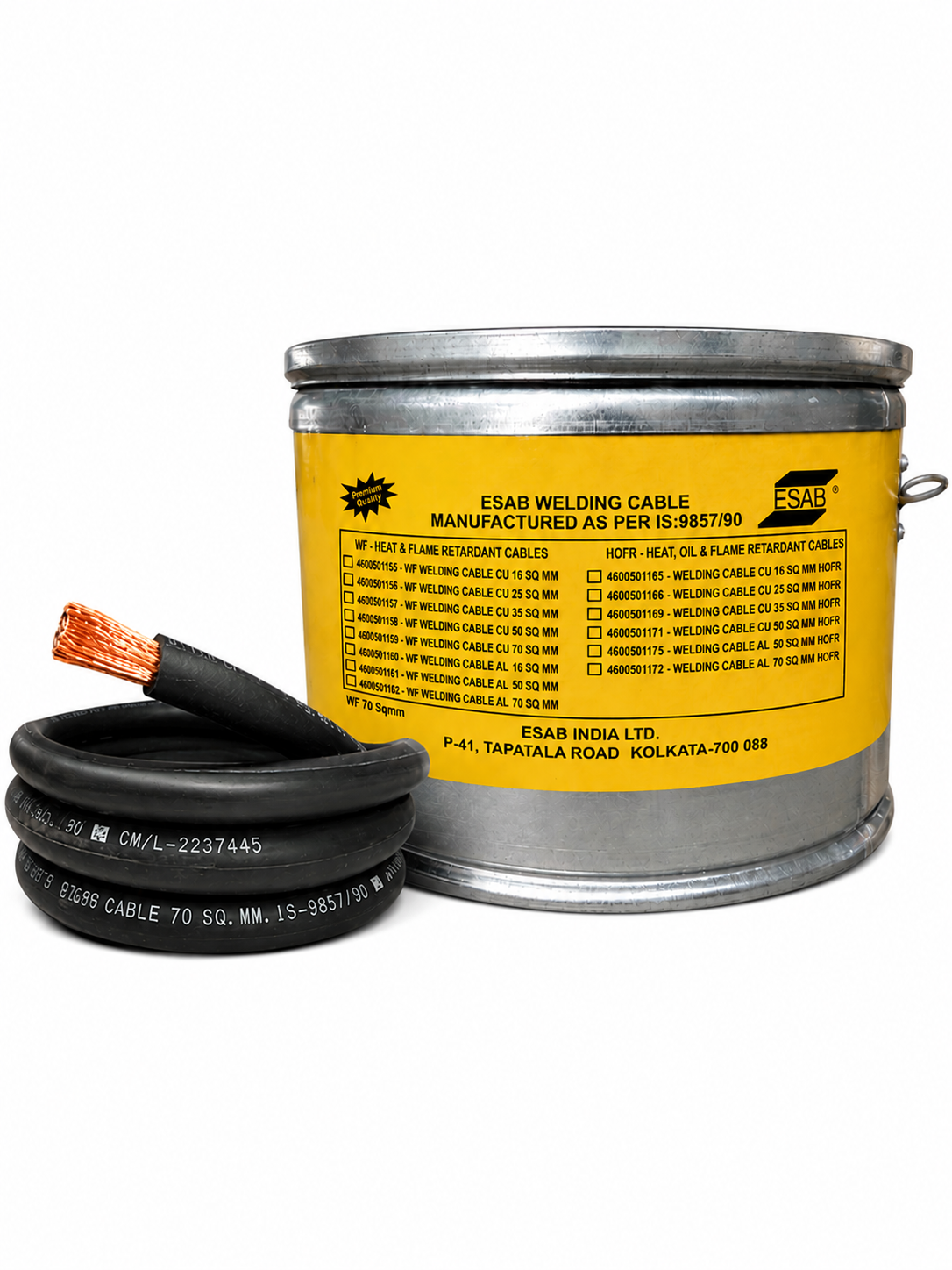


ESAB HFR & HOFR Welding Cables – Flexible Copper & Aluminium Welding Cables
ESAB HFR & HOFR Welding Cables are flexible welding cables designed for professional MMA/ARC and industrial welding applications. Available in suitable copper and aluminium configurations and multiple cross-sectional sizes, these cables are designed to provide reliable current transfer, flexibility and resistance to mechanical and environmental stresses. Select the required conductor material, cable size and length according to your welding equipment and application.
ESAB HFR & HOFR Welding Cables
ESAB HFR Welding Cable and HOFR welding cable variants are designed for professional welding applications where flexible, durable and reliable welding cables are required. Welding cables form an essential connection between the welding power source and the electrode holder, welding torch or return/earth connection.
ESAB offers welding cable configurations in multiple cross-sectional sizes and conductor materials to suit different welding-current requirements and equipment configurations.
Flexible Welding Cable Construction
The ESAB HFR Welding Cable range is designed for applications where cable flexibility and durability are important. Welding cables are regularly moved, coiled and repositioned during fabrication and maintenance operations, so the cable must withstand repeated handling while maintaining reliable electrical performance.
ESAB describes its welding cable as highly resistant to light, chemicals and mechanical damage while maintaining flexibility, including when used in cooler environments.
HFR Welding Cable
The ESAB HFR Welding Cable range is available in different conductor and cross-sectional configurations. ESAB India currently lists HFR welding cable accessories including aluminium 70 sq mm and copper 70 sq mm configurations.
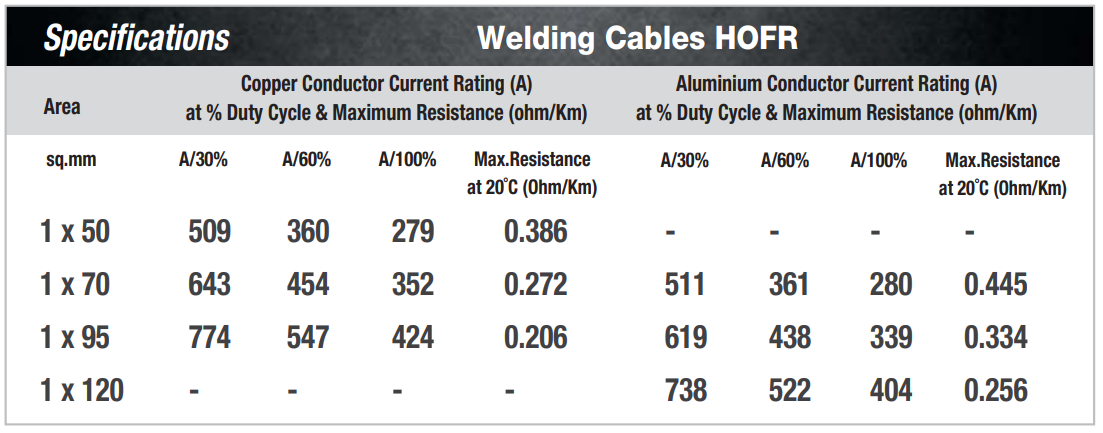
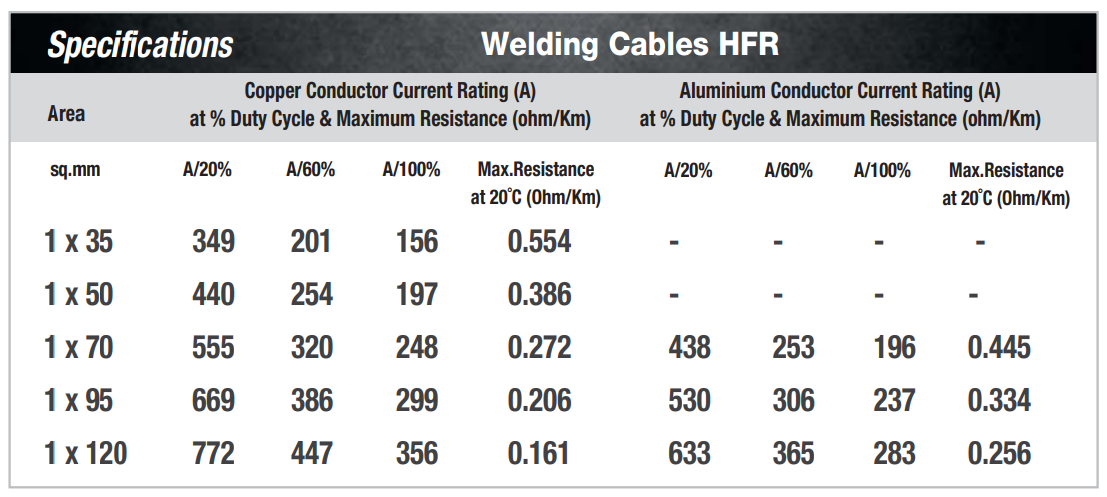
The appropriate cable should be selected according to the welding-machine output, duty cycle, cable length, conductor material and applicable welding requirements.
HOFR Welding Cable
HOFR welding cable is another commonly specified flexible welding-cable construction used for industrial welding applications. Where your product range includes ESAB HOFR variants, these should be presented according to the exact manufacturer specification, conductor material, cross-sectional area and packaging.
Because HFR and HOFR terminology can vary by manufacturer and regional product documentation, the exact specification printed on the ESAB cable or supplied documentation should be used when publishing individual variants.
Copper and Aluminium Options
Depending on the specific ESAB product configuration, welding cables may be available with copper or aluminium conductors.
Copper configurations are widely used where high electrical conductivity and flexibility are required. Aluminium versions can provide a lighter cable option while still being suitable for appropriately specified welding systems.
Do not interchange copper and aluminium cable specifications simply based on cross-sectional area. Select the cable according to the manufacturer’s current rating and the requirements of the welding system.
Multiple Cable Sizes
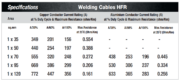
ESAB’s welding-cable range includes multiple cross-sectional sizes. The official ESAB welding-cable ordering information includes sizes such as 16, 25, 35, 50, 70, 95 and 120 mm², depending on the specific configuration and market.
Larger cross-sectional areas are generally used where higher welding currents or longer cable runs require greater current-carrying capability.
The correct cable size should always be selected according to the welding current, duty cycle, cable length, installation conditions and applicable manufacturer’s recommendations.
Suitable for MMA Welding
The ESAB HFR Welding Cable can be used as part of compatible MMA/ARC welding setups. ESAB’s official MMA cable range includes separate welding and return cables for different current ratings, demonstrating the importance of selecting cable size according to the welding system.
For example, ESAB lists dedicated 250A, 400A, 500A and 600A MMA cable configurations with different cross-sectional areas.
Industrial Applications
ESAB welding cables can be used in a wide range of professional welding environments, including:
- Heavy fabrication
- Structural welding
- General engineering
- Industrial maintenance
- Construction
- Shipyard operations
- Workshop fabrication
- Machinery repair
- Pipe and structural fabrication
- General MMA/ARC welding
The exact application depends on the cable specification and welding equipment.
Key Features
- ESAB welding cable range
- HFR and HOFR configurations
- Flexible construction
- Copper and aluminium options depending on model
- Multiple cross-sectional sizes
- Designed for professional welding applications
- Resistant to mechanical damage
- Resistant to light and chemical exposure
- Suitable for MMA/ARC welding applications
- Available in different cable lengths and packaging depending on configuration
Selecting the Correct Welding Cable
When purchasing an ESAB HFR Welding Cable, do not select the cable solely according to the welding-machine amperage.
Consider:
- Welding current
- Duty cycle
- Cable length
- Conductor material
- Cross-sectional area
- Welding-machine connection
- Electrode-holder or return-clamp connection
- Installation and operating environment
Using an appropriately sized welding cable helps ensure reliable current transfer and reduces unnecessary electrical losses and excessive cable heating.
Why Choose ESAB Welding Cables?
The ESAB welding-cable range is designed for demanding professional welding environments. Its documented resistance to light, chemicals and mechanical damage, combined with flexible construction, makes it suitable for applications where welding cables are repeatedly moved and exposed to workshop conditions.
For professional welders, fabrication companies and industrial users, selecting the correct ESAB welding cable configuration provides a practical connection between welding equipment and the welding circuit.
Safety Information
Always use welding cables that are correctly rated for the welding current, duty cycle and installation conditions. Inspect the cable regularly for cuts, abrasion, exposed conductors, damaged insulation or overheated connections.
Do not use welding cable with damaged insulation. Ensure all cable lugs, connectors, electrode holders and return clamps are correctly fitted and securely connected before welding.
Always follow the welding-machine manufacturer’s specifications and applicable electrical and workplace safety requirements.
Only logged in customers who have purchased this product may leave a review.
Related products


ESAB Confort 600 Electrode Holder 600A – Heavy Duty MMA Welding Holder for 6.3mm Electrodes
↓31% Original price was: ₹999.00.₹691.00Current price is: ₹691.00.

ESAB Cutogen 5 Blowpipe 90° 450mm with A 3/64″ Cutting Nozzle
↓32% Original price was: ₹9,999.00.₹6,773.00Current price is: ₹6,773.00.
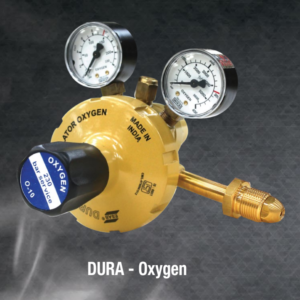
ESAB DURA 0-10 Oxygen Double Stage Regulator – 300 Bar, 10 Bar, 1000 L/min
↓33% Original price was: ₹8,508.00.₹5,725.00Current price is: ₹5,725.00.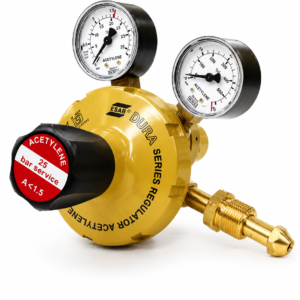
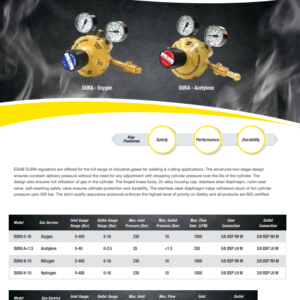
ESAB DURA A-1.5 Acetylene Double Stage Regulator – 1.5 Bar, 40 Bar Inlet
↓33% Original price was: ₹8,508.00.₹5,725.00Current price is: ₹5,725.00.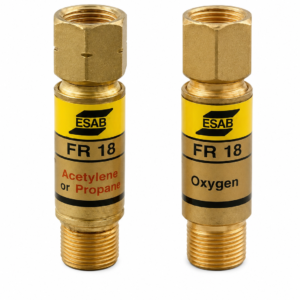
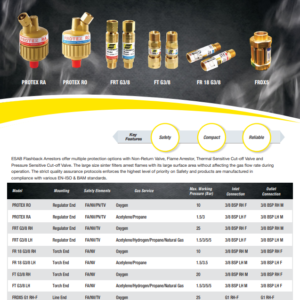
ESAB FR 18 Flashback Arrestor for Oxygen – 10 Bar Torch-Mounted Safety Arrestor
↓34% Original price was: ₹2,624.00.₹1,744.00Current price is: ₹1,744.00.

ESAB Handicool HC 600 Electrode Holder 600A – Heavy Duty Crocodile Type B Welding Holder
↓29% Original price was: ₹850.00.₹600.00Current price is: ₹600.00.

ESAB IOX 13B (2 Gauge) Oxygen Single Stage Regulator – 300 Bar
↓16% Original price was: ₹4,999.00.₹4,200.00Current price is: ₹4,200.00.




























Reviews
Clear filtersThere are no reviews yet.