
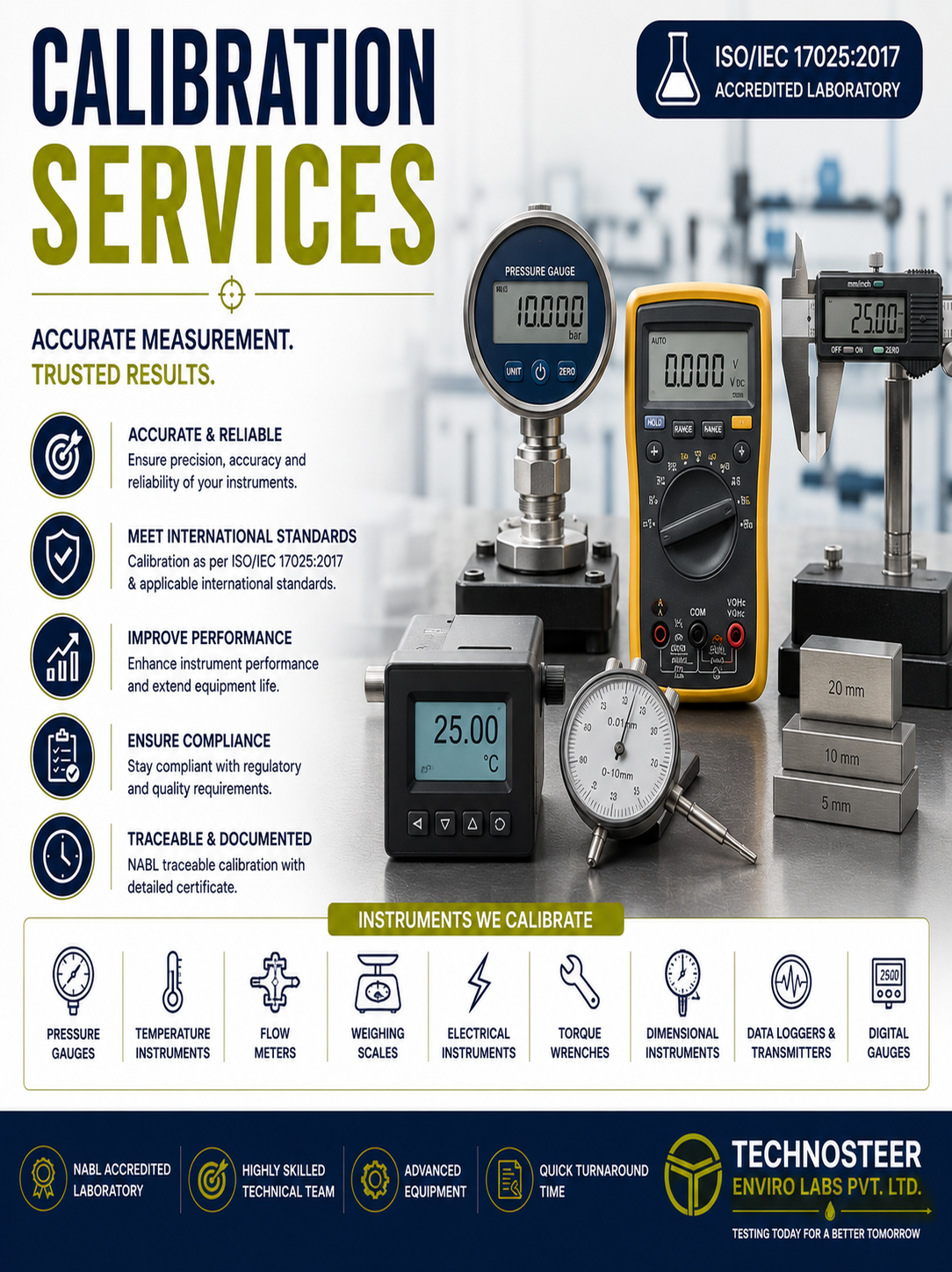
Industrial Calibration Services
↓38% Original price was: ₹8,000.00.₹5,000.00Current price is: ₹5,000.00.
Calibration Services – Industrial Instrument Calibration and Measurement Verification
Calibration services help verify the performance and measurement accuracy of instruments against appropriate reference standards and specified requirements. Regular calibration supports quality assurance, equipment reliability, and measurement traceability.
- Calibration support for eligible industrial measuring instruments
- Measurement verification against applicable reference standards
- Support for instrument maintenance and quality management programmes
- Suitable for industrial facilities, manufacturing units, laboratories, and maintenance teams
- Instrument compatibility, calibration scope, accreditation, certificate availability, pricing, and turnaround time confirmed on enquiry
Contact Technosteer Online with your instrument details and calibration requirements to check service availability.
Industrial Calibration Services – Instrument Accuracy and Performance Verification
Professional Calibration Services for Industrial Instruments
Calibration is an important part of quality control, equipment maintenance, and reliable measurement. Industrial instruments are used to measure parameters such as temperature, pressure, electrical values, mass, flow, humidity, and gas concentration. Over time, instrument readings may deviate from expected values because of operating conditions, component ageing, handling, or other influences.
Calibration Services involve comparing an instrument’s indicated values with values provided by suitable reference standards under defined conditions. The comparison helps establish measurement error or deviation and determine whether the instrument meets specified acceptance criteria. Adjustment may be performed when required and included in the agreed service.
Technosteer Online provides an enquiry point for businesses seeking industrial instrument calibration services. The appropriate service depends on the instrument type, measurement range, required accuracy, intended application, and whether an accredited calibration certificate is needed.
Why Are Calibration Services Important?
Correct measurement is essential for production quality, process control, inspection, safety monitoring, and maintenance. A suitable calibration programme helps organisations understand the performance of their instruments and maintain reliable measurement records.
- Measurement accuracy: Compare instrument readings against appropriate reference values.
- Quality assurance: Support inspection processes and quality management requirements.
- Process reliability: Help identify measurement deviations that may affect industrial operations.
- Maintenance planning: Identify instruments that may require adjustment, repair, or further inspection.
- Calibration records: Maintain documentation of calibration results and instrument history.
- Audit preparation: Support quality system and audit requirements when appropriate records are maintained.
- Equipment lifecycle management: Help determine when instruments need recalibration or further evaluation.
Calibration does not automatically guarantee that an instrument is suitable for every application. Results must be assessed against the required tolerance, operating conditions, and applicable acceptance criteria.
Types of Instruments That May Require Calibration
Calibration availability depends on the service provider’s capabilities and the instrument’s technical requirements.
1. Temperature Measuring Instruments
Temperature instruments may include thermometers, temperature indicators, temperature sensors, and compatible process measurement devices. Calibration requirements depend on the instrument type, measurement range, and required uncertainty.
2. Pressure Measuring Instruments
Pressure instruments may include pressure gauges, pressure transmitters, and other compatible pressure measurement devices. The calibration range and test method should match the instrument specifications and intended application.
3. Electrical Measuring Instruments
Electrical calibration may cover eligible meters and electrical measuring equipment, depending on the provider’s available standards and capabilities. The required electrical quantity, measurement range, and accuracy must be specified.
4. Weighing and Mass Measurement Equipment
Eligible weighing instruments and mass measurement devices may require calibration or verification against suitable standards. The method depends on the instrument design, capacity, resolution, and intended use.
5. Flow and Process Measurement Instruments
Flow meters and other process instruments may require specialist calibration facilities or an on-site procedure. Compatibility, operating medium, flow range, and installation conditions must be confirmed.
6. Gas Detection Instruments
Portable and fixed gas detectors may require gas-specific calibration procedures using suitable reference gases. Calibration requirements depend on the target gas, sensor technology, detector model, and manufacturer instructions.
7. Other Industrial Measuring Instruments
Additional categories may include humidity instruments, dimensional measuring tools, and other measurement devices. Each instrument must be assessed individually to determine whether the required calibration service is available.
Calibration Process
The calibration workflow depends on the instrument category and agreed scope. A typical process may include:
- Instrument identification: Record the manufacturer, model, serial number, measurement range, and other relevant details.
- Initial inspection: Check the instrument’s physical condition and identify visible damage or operational issues.
- Calibration planning: Determine the applicable procedure, reference standards, measurement points, and acceptance criteria.
- As-found measurement: Record the instrument’s performance before adjustment, where included in the procedure.
- Calibration comparison: Compare the instrument readings with suitable reference values under defined conditions.
- Adjustment, if required: Adjust the instrument only when appropriate, technically possible, and included in the agreed scope.
- As-left verification: Record post-adjustment results where applicable.
- Reporting: Provide calibration results and documentation according to the confirmed service arrangement.
Not every service includes adjustment, repair, on-site work, or an accredited calibration certificate. These requirements should be confirmed before the instrument is submitted.
Calibration Certificates and Traceability
A calibration certificate or report documents the work performed and the results obtained. Depending on the service, documentation may include instrument identification, calibration date, test conditions, reference standards, measured values, measurement errors, uncertainty information, and relevant acceptance criteria.
Where measurement traceability is required, confirm the traceability of the reference standards and the details recorded in the certificate. Where accredited calibration is required, verify that the calibration provider’s current accreditation scope covers the specific measurement quantity, range, and method.
An instrument should not automatically be considered acceptable simply because it has a calibration certificate. The reported results must be assessed against the tolerance and performance requirements of its intended application.
Industries and Applications
Calibration services may be relevant to organisations operating in:
- Manufacturing and production facilities
- Industrial process and automation systems
- Engineering and maintenance departments
- Electrical and electronics operations
- Quality control and inspection departments
- Laboratories and testing facilities
- Utilities and infrastructure operations
- Oil, gas, and chemical processing facilities
- Warehousing and industrial logistics
- Environmental monitoring and workplace safety
The specific instrument categories and calibration methods available must be confirmed with the service provider.
Why Choose Technosteer Online?
Technosteer Online helps customers enquire about industrial products and technical services. For calibration requirements, providing accurate instrument details helps establish the relevant service scope and identify the information needed for a quotation.
Before confirming an order, verify the instrument category, calibration range, required accuracy, service location, calibration procedure, provider credentials, certificate requirements, pricing, and turnaround time.
Service availability depends on the instrument and the confirmed calibration arrangements. No specific accreditation, measurement capability, or turnaround time is implied unless verified for the service being requested.
Request a Calibration Service Enquiry
Looking for calibration services for industrial measuring instruments or process equipment?
Contact Technosteer Online with the following details:
- Instrument name and type
- Manufacturer, model, and serial number, if available
- Measurement range and required accuracy
- Quantity of instruments
- Service location and preferred timing
- Whether an accredited calibration certificate is required
- Any applicable industry or quality system requirements
These details help clarify the required service, documentation, and next steps for obtaining a quotation.
Enquire with Technosteer Online for Industrial Calibration Services.
Explore More Industrial Products
Visit the Technosteer Online shop to explore industrial products and technical supplies. Contact the team if you need assistance identifying a suitable product or clarifying a technical requirement.
Only logged in customers who have purchased this product may leave a review.
Related products


Marine Fuel Oil Testing Services
↓10% Original price was: ₹10,000.00.₹9,000.00Current price is: ₹9,000.00.



























Reviews
Clear filtersThere are no reviews yet.