
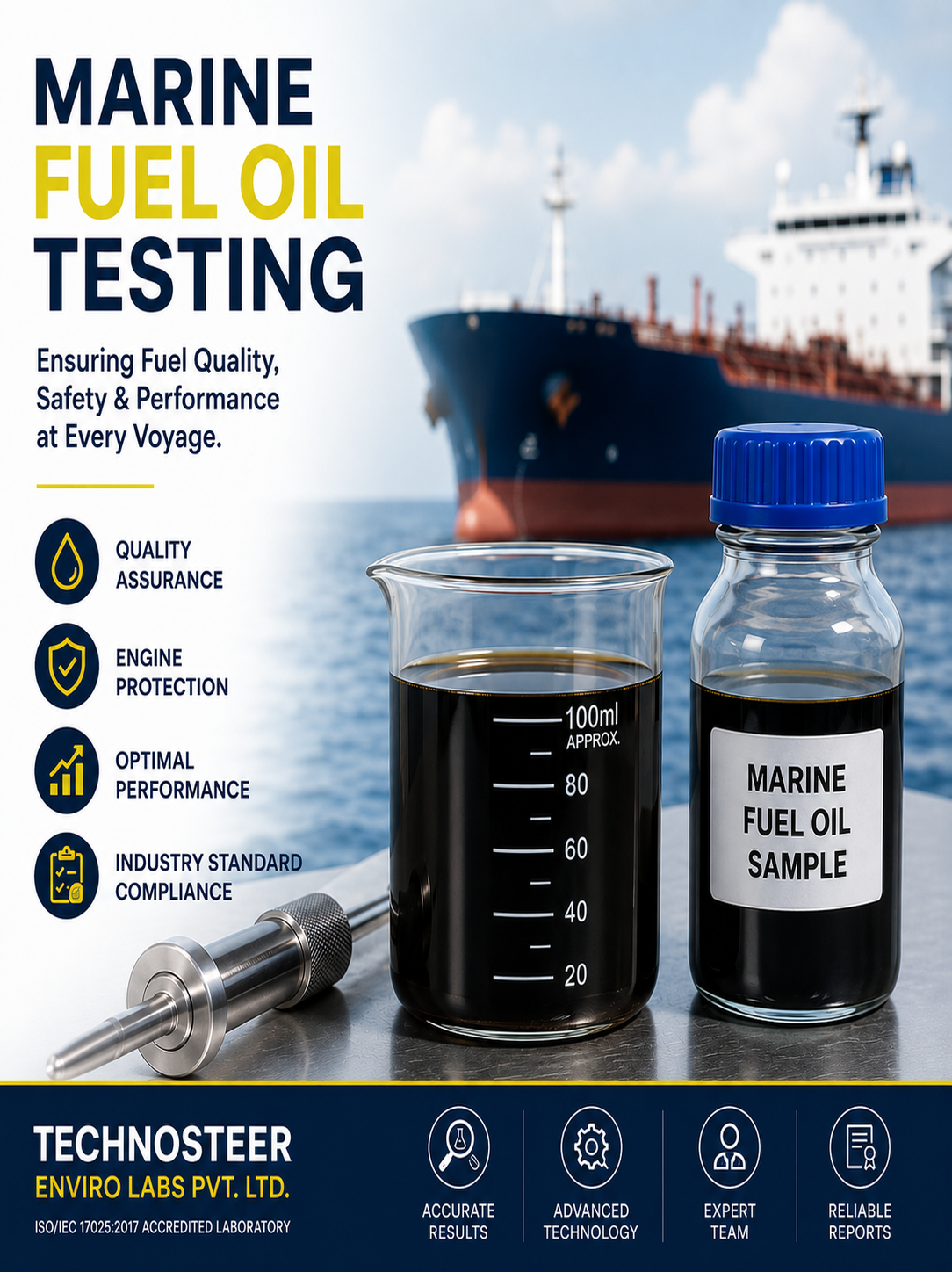
Marine Fuel Oil Testing Services
↓10% Original price was: ₹10,000.00.₹9,000.00Current price is: ₹9,000.00.
Marine Fuel Oil Testing Services – Marine Fuel Quality Analysis
Marine fuel oil testing helps assess fuel quality, verify selected fuel properties, and identify potential contamination or specification concerns. Testing can support vessel operators, ship managers, marine fuel suppliers, and bunkering operations.
- Analysis of selected marine fuel properties based on the agreed testing scope
- Possible testing for viscosity, density, sulphur, water, flash point, and sediment
- Support for bunker fuel quality checks and fuel specification verification
- Suitable for marine operators, shipping companies, fuel suppliers, and vessel maintenance teams
- Test methods, sample requirements, laboratory availability, pricing, and turnaround time confirmed on enquiry
Contact Technosteer Online with your marine fuel type, applicable specification, and required test parameters to enquire about available testing services.
Marine Fuel Oil Testing Services – Marine Fuel Quality Analysis
Professional Marine Fuel Oil Testing for Quality and Specification Verification
Marine fuel oil testing is an important part of fuel quality control in the shipping and maritime industries. Marine fuels must meet applicable specifications to support reliable engine operation, appropriate onboard fuel handling, and compliance with relevant contractual and regulatory requirements.
Marine Fuel Oil Testing involves analysing selected physical and chemical properties of marine fuel to assess its quality and suitability for the intended application. Testing may help identify excessive water, sediment, contamination, unsuitable viscosity, or other characteristics that require investigation.
Technosteer Online provides an enquiry point for businesses seeking marine fuel oil testing services. The appropriate test scope depends on the fuel grade, the applicable specification, the intended use, and the requirements of the customer.
Why Is Marine Fuel Oil Testing Important?
Marine fuel quality can affect fuel storage, purification, transfer, combustion, and engine operation. Testing provides information that helps ship operators, fuel buyers, suppliers, and technical teams assess the fuel before or after delivery.
- Fuel quality verification: Evaluate selected properties against the agreed fuel specification.
- Bunker fuel inspection: Support quality checks associated with marine fuel deliveries.
- Contamination assessment: Investigate possible water, sediment, or other unwanted material.
- Engine protection: Help identify fuel characteristics that may require attention before use.
- Supplier verification: Support purchasing and quality assurance processes.
- Specification assessment: Compare reported results with the applicable contractual or technical requirements.
- Fuel management: Support informed decisions about fuel storage, handling, and treatment.
Testing results should be interpreted alongside the applicable fuel specification, sampling details, and operating requirements. A single test result does not establish overall fuel suitability.
Marine Fuel Oil Testing Parameters
The selected test package depends on the marine fuel type, including distillate fuels, residual fuels, and applicable blended or alternative fuels.
1. Kinematic Viscosity
Viscosity influences fuel handling, heating, transfer, and injection conditions. Testing helps establish the measured viscosity at a specified temperature and assess it against the relevant requirement.
2. Density
Density measurement provides information about the fuel’s mass per unit volume at a specified temperature. It is useful for fuel characterisation and certain onboard fuel management calculations.
3. Sulphur Content
Sulphur testing determines the sulphur concentration in a fuel sample. The result may be relevant to fuel specification requirements and applicable sulphur emission limits.
4. Flash Point
Flash point testing evaluates the temperature at which vapour above a sample can ignite under specified test conditions. This is an important safety-related fuel property.
5. Water Content
Water analysis helps identify the presence and quantity of water in the fuel sample. Excessive water may affect fuel handling and can contribute to operational problems.
6. Sediment and Total Sediment
Sediment-related testing helps assess insoluble material in marine fuel. The appropriate method depends on the fuel type and specification. Potentially relevant analyses include total sediment tests for applicable residual fuels.
7. Additional Fuel Quality Tests
Depending on the required scope, additional parameters may include acid number, ash, carbon residue, pour point, catalytic fines such as aluminium and silicon, and other specification-dependent properties.
Not every parameter is included in every test package. Confirm the available methods and required parameters before submitting a sample.
Applicable Marine Fuel Standards
ISO 8217 is an important international specification for marine fuels used in marine diesel engines and boilers before onboard fuel handling. The applicable edition and fuel category should be established from the customer’s purchase specification and intended use.
ISO 8217:2024 includes categories for distillate and residual fuels and addresses applicable fuel characteristics and requirements. The standard also covers certain synthetic, renewable, recycled-source, and blended hydrocarbons where permitted by its provisions.
The appropriate testing programme may use applicable ISO or ASTM test methods for individual fuel properties. The method must match the property being measured, the sample type, and the contractual requirement.
Applications of Marine Fuel Oil Testing
Marine fuel testing may be relevant to:
- Commercial shipping companies and vessel operators
- Ship management and marine engineering teams
- Bunker fuel suppliers and distributors
- Marine fuel procurement departments
- Port and bunkering operations
- Marine fuel storage and handling facilities
- Marine engine maintenance providers
- Fuel quality assurance and dispute investigation
Testing can support pre-delivery quality assessment, post-bunkering verification, routine fuel management, and investigation of suspected off-specification fuel.
Sample Collection and Handling
Representative sampling is essential for meaningful marine fuel analysis. Fuel may not be uniform throughout a storage tank, delivery line, or batch, so the sampling procedure must suit the purpose of the test.
Before dispatching a sample, confirm:
- The required sample quantity for the selected tests
- The correct sample container and sealing requirements
- The sampling point and applicable sampling procedure
- The fuel grade and supplier or delivery reference
- The date, time, and location of sampling
- The requested tests and applicable specification
- The required sample labelling and transport arrangements
Use an appropriate container and follow the laboratory’s sample handling instructions. Marine fuel samples can be combustible and may contain hazardous contaminants; handle and transport them in accordance with applicable safety procedures.
Understanding the Test Report
A marine fuel testing report may include the sample identification, test methods, measured values, units, and other details required by the agreed service.
Results should be compared with the correct specification and fuel grade. Where a contractual dispute is involved, sampling records, sample custody, test method precision, and the applicable interpretation procedure can be important.
A report covering selected parameters should not be represented as complete certification of every requirement in ISO 8217 unless the full applicable scope has been assessed.
Why Choose Technosteer Online?
Technosteer Online helps customers enquire about industrial products and technical services. For marine fuel oil testing, providing the fuel grade, requested parameters, applicable specification, and reason for testing helps clarify the required service scope.
Before confirming an order, verify the performing laboratory, available test methods, relevant accreditation where required, sample instructions, report format, pricing, and turnaround time.
Service availability is subject to confirmation. No specific laboratory accreditation, fixed turnaround, or comprehensive testing package is implied unless confirmed for the requested service.
Request Marine Fuel Oil Testing
Need to assess marine fuel quality for bunkering, procurement, fuel management, or specification verification?
Contact Technosteer Online with your fuel type, applicable specification, required parameters, sample details, and intended use. The testing scope, sample requirements, laboratory arrangements, pricing, and expected reporting time can then be clarified.
Enquire with Technosteer Online for Marine Fuel Oil Testing Services.
Explore More Industrial Products
Visit the Technosteer Online shop to explore industrial products and technical supplies. Contact the team if you need assistance identifying a suitable product or clarifying a technical requirement.
Only logged in customers who have purchased this product may leave a review.
Related products

Industrial Calibration Services
↓38% Original price was: ₹8,000.00.₹5,000.00Current price is: ₹5,000.00.





























Reviews
Clear filtersThere are no reviews yet.